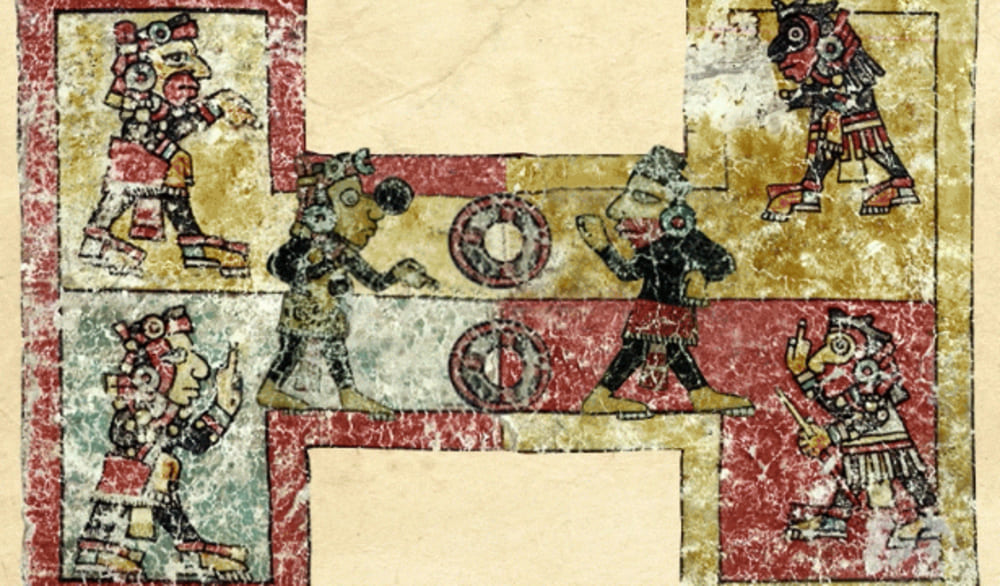
Among the great military civilizations of the ancient world, the Aztecs stand out for the ingenuity and effectiveness of their weapons. Working almost entirely with materials available in Mesoamerica — obsidian, wood, animal hide, copper, and stone — Aztec craftsmen produced weapons that repeatedly surprised and devastated European soldiers who encountered them in the sixteenth century. The Spanish conquistadors, who arrived expecting to face primitive opposition, found themselves facing warriors equipped with cutting tools capable of decapitating a horse in a single blow.
This guide covers the full range of Aztec weaponry — from the fearsome macuahuitl to the silent blowgun — exploring not just what these weapons were, but how they worked, why they were designed the way they were, and what they reveal about Aztec military culture.
Aztec Weapons for Hand-to-Hand Combat
The Macuahuitl: The Aztec’s Lethal Blade
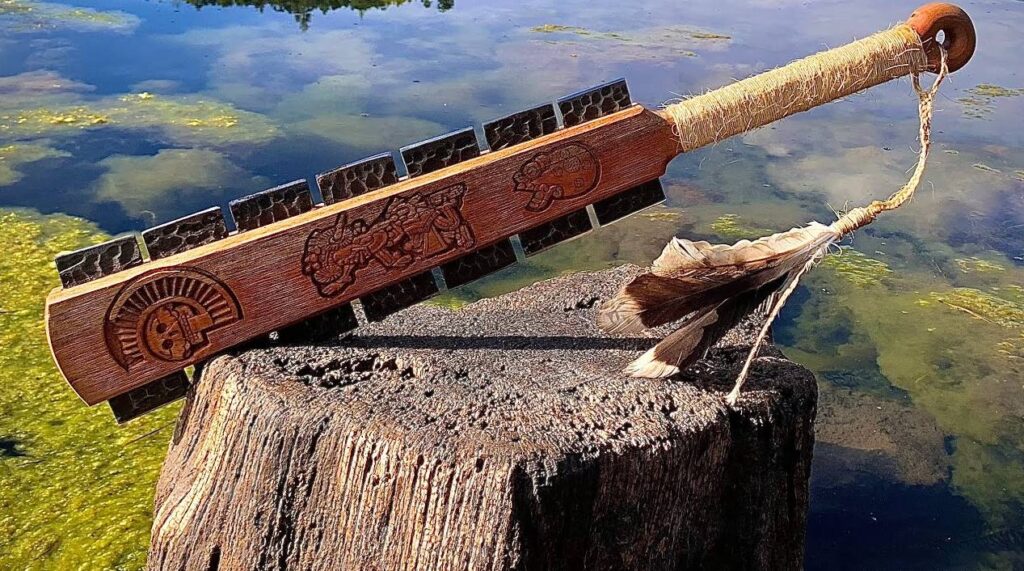
The macuahuitl was arguably the most iconic weapon in the Aztec arsenal — and one of the most effective close-range weapons in the ancient world. Shaped roughly like a wooden paddle or oar, it was embedded along both edges with razor-sharp obsidian blades, carefully fitted into grooves cut into the wood and secured in place.
The result was a weapon that combined the weight and impact force of a club with the cutting ability of a blade. Obsidian — volcanic glass — can be fractured to produce edges sharper than modern surgical steel. A well-made macuahuitl could sever limbs and, according to Spanish accounts, was capable of decapitating a horse with a single powerful swing.
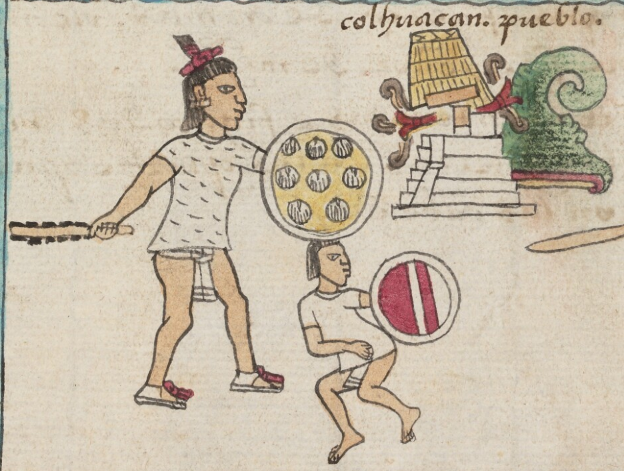
Aztec warriors depicted in the Codex Mendoza (c. 1541), holding macuahuitl swords and chimalli shields during battle. (Public domain)
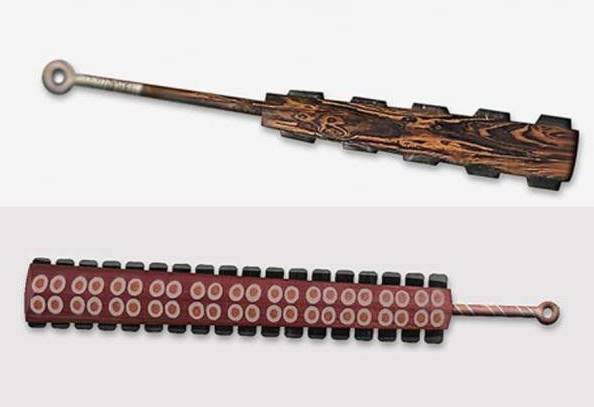
The macuahuitl came in two main sizes: a one-handed version for individual combat and a larger two-handed version that required both arms to wield effectively. Warriors trained extensively with both, and the weapon’s design rewarded skill — in the hands of an experienced warrior, it was devastatingly effective at close range.
Other Melee Weapons
The macuahuitl was the most famous Aztec close-range weapon, but it was far from the only one. Aztec warriors carried a diverse arsenal of melee weapons, each designed for specific combat situations.
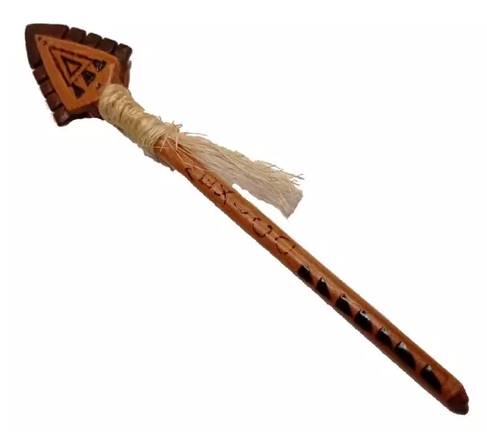
The Tepoztopilli was a long spear ranging from three to seven feet in length, featuring a broad, shovel-shaped tip lined with obsidian blades along its edges. Unlike a standard thrusting spear, the Tepoztopilli’s wide obsidian-edged head allowed warriors to slash, jab, and sweep at enemies simultaneously — making it particularly effective for warriors fighting in formation at the front lines.
The Itztopilli was the Aztec axe, available in various sizes depending on the combat role. Smaller versions were fast and maneuverable for close quarters fighting, while larger versions delivered devastating blows capable of breaking through defensive armor. Some warriors also carried hooked blades resembling scythes, ideal for pulling enemies off balance or hooking around shields in close combat.
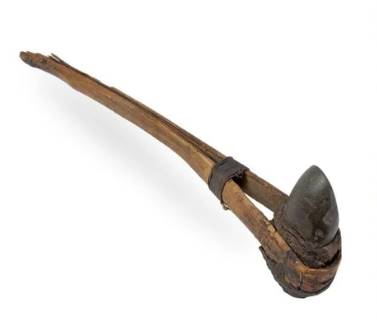
Clubs were another staple of the Aztec arsenal — simple but effective wooden weapons roughly resembling a modern baseball bat. While less sophisticated than the macuahuitl, a well-made wooden club delivered crushing impact force and required minimal training to use effectively, making it a practical backup weapon for warriors at all levels.
Aztec Weapons for Long-Range Combat
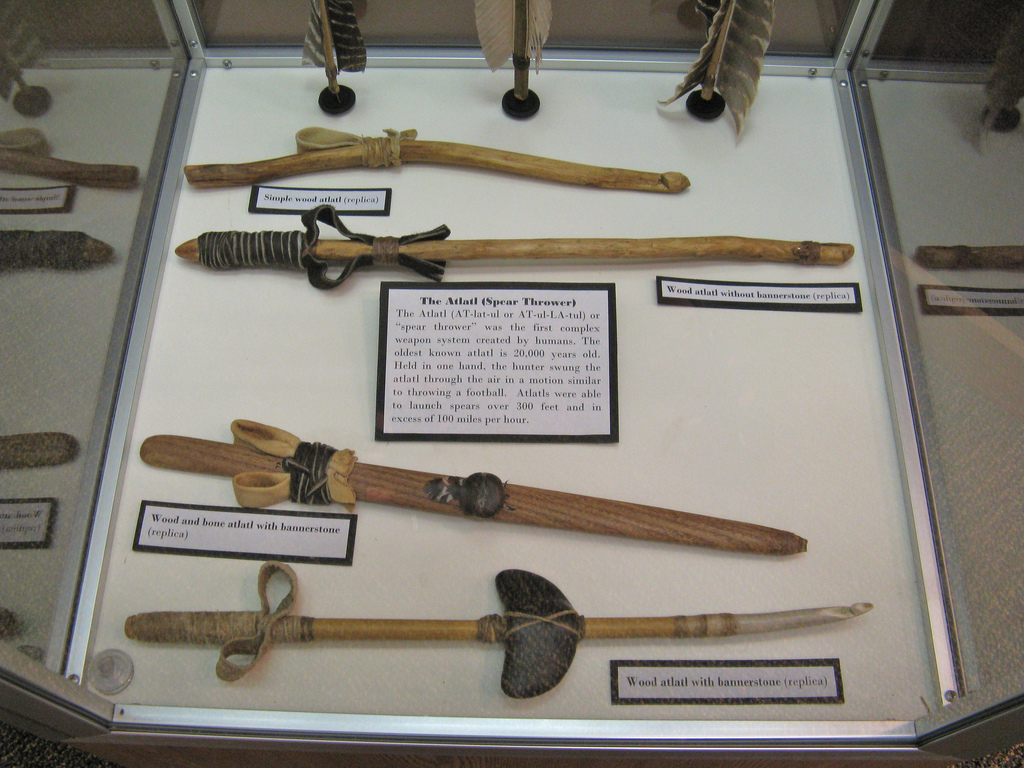
The Atlatl: Enhancing Spear Throwing
The atlatl was one of the oldest and most effective ranged weapons in Mesoamerican history — and the Aztecs used it with devastating effect on the battlefield.
At its simplest, the atlatl was a spear-throwing device: a flat board or stick roughly two feet long with a hook or peg at one end that cradpled the base of a dart or spear. By extending the thrower’s arm length artificially, the atlatl dramatically increased the leverage applied to the throw — resulting in projectiles launched with significantly more speed, force, and distance than a human arm alone could achieve.
In practical terms, an experienced atlatl user could hurl a dart or spear with enough force to pierce the quilted cotton armor worn by opposing warriors, and at distances that kept the thrower well out of reach of enemy hand weapons. The atlatl also allowed warriors to throw from a crouched or partially covered position, reducing their own exposure while attacking.
The atlatl was not unique to the Aztecs — variations of the weapon appeared across pre-Columbian America, including among the Maya civilization — but the Aztecs refined its use and integrated it systematically into their military tactics alongside the macuahuitl and other weapons.
The Sling: Tool of War and Hunt
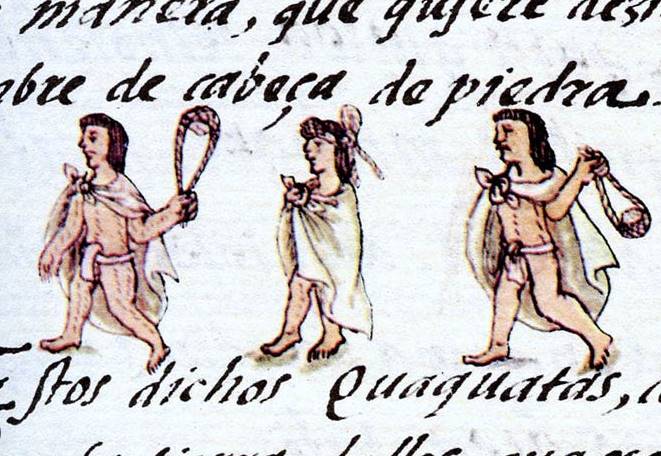
The sling was one of the simplest weapons in the Aztec arsenal — and one of the most underestimated. Made from woven fibers or leather and designed to be both long and flexible, the Aztec sling could hurl stones or other projectiles at high velocity over considerable distances, giving warriors a ranged option that required no specialized materials beyond what nature provided.
Unlike the atlatl, which required some mechanical skill to operate effectively, the sling was relatively straightforward to learn and could be mastered with consistent practice. This made it a practical weapon for a wider range of warriors, and it served double duty as a hunting tool — the same technique used to bring down game in the field translated directly to battlefield use.
In combat, slingers could pepper enemy formations with stones from a safe distance, softening up opposing forces before close-range warriors moved in with macuahuitl and spears. A well-aimed stone from a sling delivered with enough force could incapacitate or kill even an armored opponent, and the psychological effect of sustained sling fire on an advancing enemy should not be underestimated.
The Blowgun: Silent and Deadly
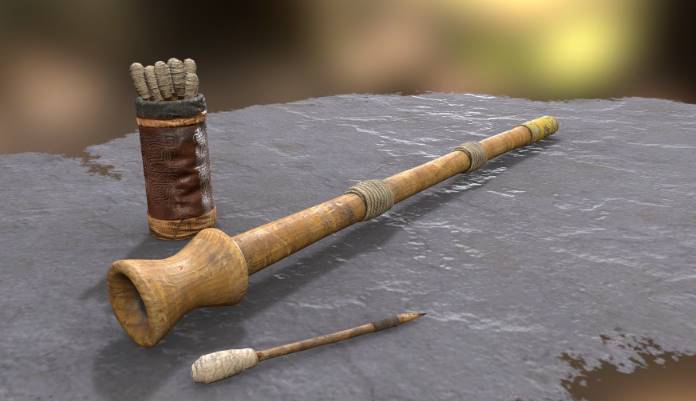
The blowgun — known in Nahuatl as the tlacalhuazcuahuitl — was one of the most distinctive weapons in the Aztec arsenal, valued not for brute force but for stealth and precision. Unlike the atlatl or sling, which relied on physical power to deliver projectiles, the blowgun operated on breath alone, making it nearly silent in use and difficult for an enemy to detect or anticipate.
Blowguns came in both long and short versions depending on the situation. Longer blowguns offered greater accuracy and range, while shorter versions were easier to carry and conceal. Both were capable of firing darts made from a variety of materials — light wood, bone, or reed — which could be tipped with plant-based poisons or herbal compounds designed to incapacitate, paralyze, or render a target unconscious rather than kill outright.
This made the blowgun particularly useful for a specific tactical role: rather than deploying it as a general battlefield weapon, the Aztecs used trained specialists — skilled hunters familiar with both the weapon and the preparation of poisons — to target specific enemies during engagements. Taking down a key enemy commander or disrupting a formation with a sudden wave of incapacitating darts required precision and knowledge that went well beyond standard warrior training.
The blowgun also served as a primary hunting weapon outside of warfare, used to bring down birds and small game without damaging the meat or feathers — a practical consideration in a civilization where both were valuable resources.
Bows and Arrows: The Tlahhuitolli in Battle
While the atlatl and sling were distinctly Mesoamerican ranged weapons, the bow and arrow represented a technology the Aztecs shared with cultures across the world — and one they had refined to a high degree of effectiveness.
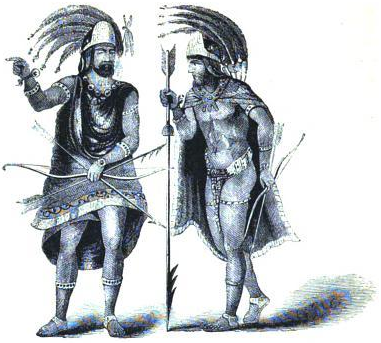
The Aztec longbow, known as the tlahhuitolli, was typically around five feet long and strung with animal sinew, which offered better elasticity and durability than plant-based cordage. This gave the tlahhuitolli a strong draw weight and respectable range, allowing archers to engage enemies well before close-range combat began.
Aztec arrows were crafted with care. The heads were typically made from obsidian or flint — both capable of producing extremely sharp edges that cut cleanly through flesh and, at close range, through the quilted cotton armor worn by opposing warriors. After a battle, warriors made a point of recovering spent arrows whenever possible — a practical acknowledgment that obsidian and flint, while available, still required skilled craftsmen to work into usable arrowheads.
The tlahhuitolli was versatile on the battlefield. Archers could fire from a distance to soften enemy formations before the main assault, employ flaming arrows against wooden structures or supply caches, or continue shooting while moving — a significant tactical advantage in the fluid engagements that characterized Aztec warfare.
Aztec Defensive Technology: Shields and Armor
Aztec military sophistication extended well beyond their weapons — their defensive equipment was equally impressive and, in some respects, ahead of its time.
The Chimalli: Shield as Weapon and Art
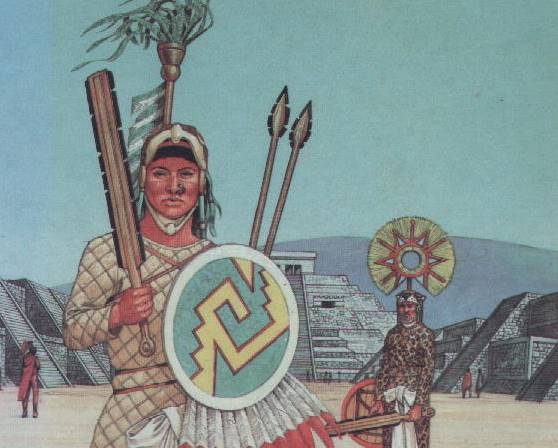
The chimalli was the standard Aztec shield, and it was far more than a simple defensive tool. Constructed from wood or woven reeds and covered with animal hide, the chimalli was designed to deflect blows, absorb arrow impacts, and protect the warrior’s body during close combat. Larger versions offered broad coverage for front-line warriors, while smaller, lighter versions gave individual fighters greater maneuverability in hand-to-hand combat — particularly useful when fighting with the macuahuitl, which required freedom of movement to wield effectively.
What set the chimalli apart from shields in many other cultures was its dual function as a ceremonial and artistic object. Elite warriors carried shields decorated with intricate featherwork mosaics, precious metals, and elaborate geometric patterns — visual statements of rank, military achievement, and divine favor. A warrior’s shield was as much a declaration of identity as it was a piece of equipment.
Ichcahuipilli: Cotton Armor
The primary body armor worn by Aztec warriors was the ichcahuipilli — a garment made from two or three layers of densely quilted cotton, soaked in saltwater brine and left to dry. The resulting material was surprisingly effective at stopping projectiles and absorbing the impact of bladed weapons, while remaining light enough to allow the mobility that Aztec combat tactics demanded.
Spanish conquistadors, initially dismissive of cotton armor compared to their own steel plate, quickly recognized its effectiveness in the tropical climate of Mesoamerica — where metal armor caused dangerous overheating — and many adopted the ichcahuipilli themselves. This was perhaps the clearest acknowledgment that Aztec defensive technology was genuinely sophisticated, not primitive.
Aztec armor development consistently kept pace with — and sometimes outpaced — advances in offensive weaponry, reflecting a military culture that took defensive engineering as seriously as weapon design.
Frequently Asked Questions About Aztec Weapons
What was the most powerful Aztec Weapon?
The macuahuitl is widely considered the most devastating weapon in the Aztec arsenal. Its obsidian-edged blades could sever limbs and, according to Spanish accounts, were capable of decapitating a horse in a single blow. Combined with its reach and the warrior training behind it, the macuahuitl had few equals in close combat.
Did the Aztecs have any weapons that surprised the Spanish conquistadors?
Yes — several. The macuahuitl’s cutting ability shocked Spanish soldiers who expected primitive club-like weapons. The atlatl’s range and penetrating power also caught many conquistadors off guard. Perhaps most surprisingly, the Aztec quilted cotton armor proved so effective in the tropical climate that many Spanish soldiers abandoned their own metal armor and adopted it instead.
Were Aztec weapons only used for warfare?
No — many Aztec weapons doubled as hunting tools. The blowgun, sling, and bow and arrow were all used for hunting game as well as combat. This dual purpose meant Aztec warriors maintained their weapon skills through everyday hunting activities, keeping them battle-ready even in peacetime.
What happened to Aztec weapons after the Spanish conquest?
Most original Aztec weapons did not survive. Wood, cotton, and feathers deteriorate over centuries, and the Spanish actively destroyed much of what they found. No original macuahuitl exists today — what we know about them comes primarily from Spanish accounts and illustrations in historical codices like the Codex Mendoza and the Florentine Codex.
You can also check out: The Rich Symbolism and History of Aztec Art